Consolidating operations across entities
For groups running two or more entities
Four entities, four systems, one set of numbers nobody trusts.
Groups accumulate software the way they accumulate businesses — one acquisition at a time. Op3ro consolidates operations across entities into one system with one data model, so group reporting stops being a monthly reconciliation exercise.
What is your back office costing you?
Recoverable each year
$1,872,000
480 hrs/week reclaimed · 60% automatedWant to see it actually working? We'll send you a walkthrough of the real system running our $5M landscaping business — quoting a job, rostering the week, capturing receipts on site. No slides.
Six things a group needs that a single-site business doesn’t.
Every one of these is a reason group software projects stall. They get scoped up front, not discovered in month five.
01
Multi-entity consolidation
Each entity keeps its own jobs, crews, pricing and branding, on one shared data model. Group reporting rolls up automatically because there is nothing to reconcile — the numbers were never in four different shapes to begin with.
02
Migration without stopping work
Entities move one at a time, with historical jobs, clients and quotes brought across and the old system kept read-only until you're satisfied. Nobody downs tools for a cutover weekend.
03
Data ownership and where it lives
Your data sits in your own database instance, hosted in Australia, and it is yours. Full export at any time, in a documented schema, with no exit fee and no hostage-taking on the way out.
04
Access control and audit trail
Role-based access by entity and by function, so a site manager sees their site and the group finance lead sees everything. Every change to a quote, price or timesheet is logged with who, what and when.
05
Exit and due-diligence readiness
Documented systems and clean, consistent data across entities are exactly what buyers pay for — and what they discount for when it's missing. Diligence stops being a three-month archaeology project.
06
A phased rollout across sites
One entity first, chosen because it's representative rather than easy. Prove it, document what changed, then roll the same configuration to the next site with the lessons already applied.
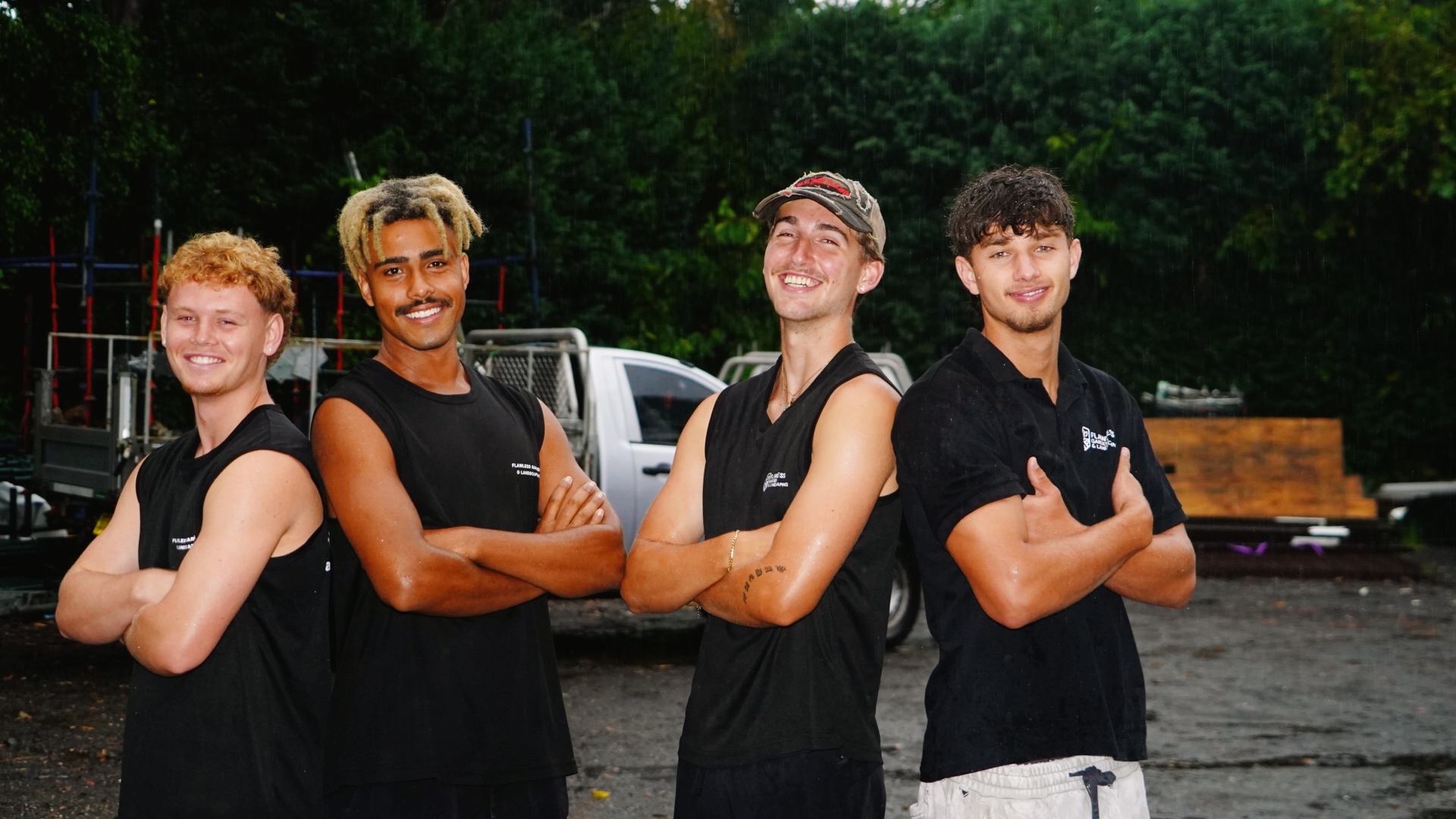
Built running a real operation, not a slide deck
Flawless Gardens · Northern Beaches, Sydney — our own business, and where every part of Op3ro was built and tested.
How we work with groups
Three commitments that make a multi-entity rollout survivable.
Discovery across the group
We map every entity's operating process, catalogue the software each one is paying for, and identify what genuinely differs between them versus what only differs because nobody standardised it.
Entity-by-entity rollout
A pilot entity, then a repeatable rollout pattern. Each entity has its own go-live plan, its own migration checklist, and its own sign-off before the next one starts.
A named point of contact
One person accountable for the group, from scoping through to the retainer. Not a ticket queue and not a rotating account manager.
Where group work sits.
Multi-entity consolidation is scoped, not listed — but the two tiers below it are published so you know the shape of the numbers before we speak.
Tier 1
Operations Consulting
from $8,000
One or two processes, built into the tools you already run. Live in two to three weeks. For businesses that don't want to replace anything yet.
You keep your existing licences
The Op3ro System
from $30,000
The full operating system, configured to your business. Quoting, scheduling, CRM, finance, fleet, team chat and Op3ro AI. One-time build plus hosting — no per-seat licence, and you own it outright.
One-time build + hosting · you own it
Tier 3
Group & multi-entity
priced on scope
Multiple entities, migrations from existing systems, custom integrations, and a rollout plan across sites. Where consolidating a stack is a project, not a purchase.
Every engagement starts with the $2,000 audit, credited in full against whatever you go ahead with.
 Who built it
Patrick Goodyer. Software developer. Not a tradesman.
I've never been on the tools. No trade background, no qualification, never swung a hammer for money. What I do have is six years and 300+ automation projects behind me, and a 100% job success record in the top 0.5% of Upwork's 17 million freelancers.
In July 2025 we bought a small landscaping business that ran on spreadsheets, phone calls and one person's memory. Fourteen months later it's a $5M group, and the back office never grew to match. That's not because I'm a better landscaper than you — I'm not one at all. It's because the admin runs itself.
The walkthrough is the live account, not a demo tenant: quoting a job, rostering the week, capturing receipts on site. 1,003 jobs have gone through it.
300+
projects delivered
100%
job success score
Top 0.5%
of 17 million Upwork freelancers
$200k+
earned on platform
Verified Upwork reviews from automation and software projects. Trades client references available on request.
“Patrick is the best consultant I've worked with so far. He's extremely professional, super knowledgeable and extremely meticulous in his work.”
“A problem I spent weeks trying to figure out, Pat did in a blink of an eye. Truly a wizard in saving time for business owners. Already passed on his details to a few friends. 10/10.”
“He figured out how to do something that was very complex, with lots of moving parts. Probably never been done before. If you are looking for a creative, out of box thinker, I highly recommend Patrick.”
“Pat was sensational. He was able to deliver on everything that he said he would, even when working on a solution for a system that he had no prior experience with.”
“Patrick was always available and was very knowledgeable about Monday.com. Would highly recommend him to anyone needing a hand with process automation.”
“I highly recommend Pat for any automation work involving Pipedrive, Integromat, Zapier, Clickfunnels with emails and SMS marketing. Pat's responsiveness and knowledge was outstanding.”
“Pat and his team are the best in the business and are like having a Swiss army knife of knowledge at your disposal.”
“Patrick was an absolutely brilliant addition to our CRM migration team. He has a deep understanding of both Pipedrive and Monday that helped us deliver a very effective transition.”
“Pat was great to work with. He is super knowledgeable and efficient. He added tremendous value to the project and our small business.”
“He completed the task effectively and efficiently, but also offered to record a video explaining what he'd done so that I didn't run into the same issue again.”
“Patrick is extremely knowledgeable about the Gcal and Zoom APIs, and managed to resolve a range of problems for me within an hour consultation.”
“Patrick is fantastic. His communication is second to none, and the work he completed was exactly as briefed. I couldn't recommend Patrick highly enough!”
“Pat really knows his stuff. He did everything to our specifications, he was reasonable with his rates, and was a real pleasure to work with.”
“Patrick did an amazing job that seemed very complicated to me. He knows automations and SMS like the back of his hand.”
“Patrick was amazing and local to me which was great to call and chat about things. He built what I asked to be built and was always contactable.”
Before you hire an automation consultant.
Almost every consultant selling AI to trade businesses has never run one. They have never quoted a job at 9pm, never had a crew standing around waiting on a delivery, never chased a progress claim past the cut-off. They have helped clients in the industry. That is not the same thing, and it is why most of these projects quietly fail — they map a process they have only ever been told about.
We own and operate a $5M construction and landscaping group in Sydney. Every process we sell you, we run ourselves, every day.
Ask any other consultant the same question we’d expect from you: what’s your trade business, and can we come and watch it run?
What group operators ask
We have four different job systems across the group. Can they all go?
Usually yes, but not on day one and not all at once. We consolidate onto one system entity by entity, and any that has to stay for a contractual reason gets integrated rather than fought.
Who owns the data if we part ways?
You do, at every point. It's your instance, hosted in Australia, with a documented schema and full export on request. There is no exit fee.
How long does a group rollout take?
The pilot entity is typically live in six to ten weeks. After that each additional entity is faster, because the configuration and the migration pattern already exist.
We're preparing for a sale in two years.
Then start now. Documented systems, clean data and operations that don't depend on named individuals take twelve to eighteen months to establish — and they are what diligence tests.
Book a scoping call
Bring whoever holds the group P&L and whoever runs operations at one of the entities. We'll work out what consolidating actually involves at your size.
Twenty minutes. No pitch.
Intro call
20 minutes · Free · times shown in Sydney
Step 1 · Pick a date